
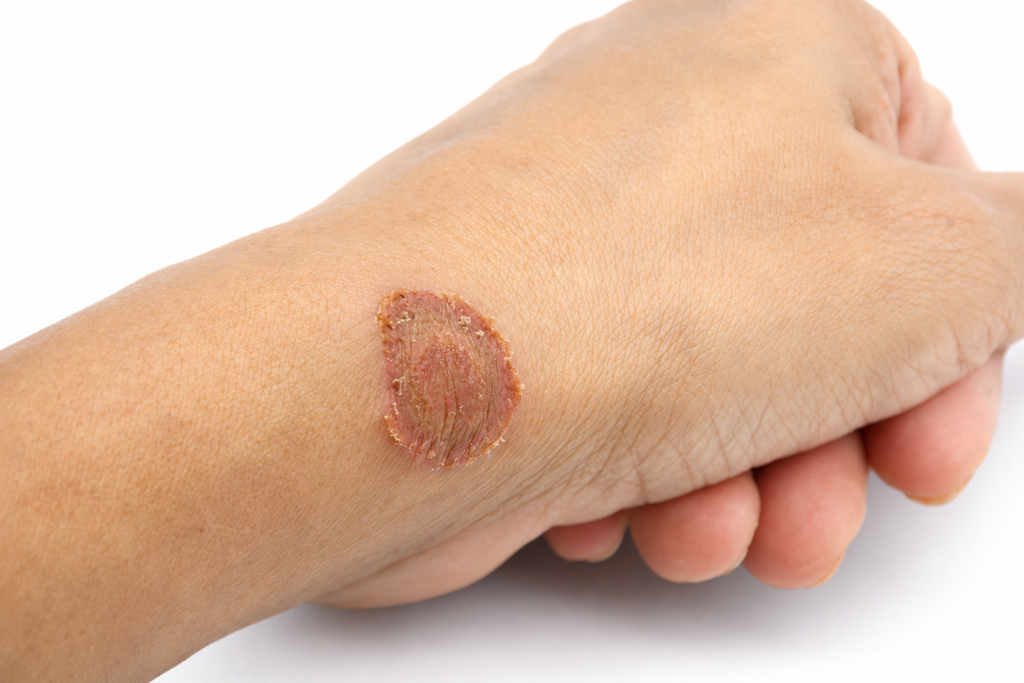
Why Does Ringworm Keep Coming Back?
Ringworm is one of the most common fungal skin infections seen by dermatologists. While many patients experience improvement with treatment, some find that the infection keeps returning despite repeated use of creams or medications. Recurrent ringworm can be frustrating, but understanding the underlying causes can help prevent future episodes.
What Is Ringworm?
Ringworm, medically known as tinea, is a fungal infection that can affect the skin, groin, feet, scalp, and nails. Despite its name, ringworm is not caused by a worm. It is caused by fungi that thrive in warm, moist environments.
Common symptoms include:
* Itchy red patches
* Circular or ring-shaped rashes
* Scaling and peeling skin
* Burning or irritation
Reasons Why Ringworm Keeps Coming Back
1. Stopping Treatment Too Early
One of the most common reasons for recurrence is discontinuing treatment as soon as the itching or rash improves.
Although symptoms may disappear within a few weeks, fungal organisms may still be present in the skin. Stopping medication prematurely allows the infection to return.
Always complete the full course of treatment prescribed by your dermatologist.
2. Using Steroid-Containing Creams
Many over-the-counter creams contain a combination of steroids, antifungals, and antibiotics.
While steroids may temporarily reduce redness and itching, they can suppress the skin’s immune response and allow the fungus to spread deeper and become more difficult to treat.
This condition is often referred to as steroid-modified fungal infection.
3. Re-Infection from Family Members
Fungal infections can spread easily through close contact.
If one family member is infected and others remain untreated, the fungus can continuously circulate within the household.
Family members with itching, rashes, or fungal infections should also be evaluated and treated if necessary.
4. Sharing Personal Items
The fungus can survive on various personal items such as:
* Towels
* Clothing
* Bedsheets
* Socks
* Combs and hair accessories
Sharing these items can lead to repeated infections.
Wash personal items regularly and avoid sharing them with others.
5. Excessive Sweating and Humidity
Fungi thrive in warm and moist environments.
Risk factors include:
* Hot weather
* Excessive sweating
* Tight clothing
* Prolonged moisture on the skin
Keeping the skin dry and wearing loose, breathable cotton clothing can help reduce recurrence.
6. Infected Clothing and Footwear
Even after successful treatment, fungal spores may remain on:
* Undergarments
* Socks
* Shoes
* Gym clothing
Regular washing, proper drying in sunlight when possible, and maintaining good hygiene can help prevent re-infection.
7. Untreated Nail or Foot Fungus
Nails and feet can act as reservoirs for fungal infection.
A person may successfully treat fungal patches on the body, but if nail fungus or athlete’s foot remains untreated, the infection can spread back to other areas of the skin.
A thorough dermatological examination can help identify hidden sources of infection.
8. Diabetes and Other Medical Conditions
Certain medical conditions may increase the risk of recurrent fungal infections, including:
* Diabetes
* Obesity
* Immune system disorders
Patients with frequent recurrences may benefit from evaluation for underlying health conditions.
9. Incorrect Diagnosis
Not every itchy rash is a fungal infection.
Conditions such as:
* Eczema
* Psoriasis
* Contact dermatitis
* Certain bacterial infections
can sometimes resemble fungal infections.
If treatment repeatedly fails, a dermatologist may perform additional tests to confirm the diagnosis.
10. Inadequate or Improper Treatment
Some fungal infections require:
* Longer treatment durations
* Oral antifungal medications
* Combination treatment approaches
Self-medication or using inappropriate creams may not completely eliminate the infection.
How Can You Prevent Ringworm from Returning?
To reduce the risk of recurrence:
✓ Complete the full treatment course.
✓ Avoid steroid-containing creams unless prescribed.
✓ Keep the skin clean and dry.
✓ Change sweaty clothes promptly.
✓ Avoid sharing towels, clothing, and personal items.
✓ Wash clothes, undergarments, and bedsheets regularly.
✓ Treat infected family members if necessary.
✓ Seek medical advice if the infection repeatedly returns.
When Should You See a Dermatologist?
Consult a dermatologist if:
* Ringworm keeps recurring despite treatment
* The infection is spreading rapidly
* Multiple family members are affected
* Over-the-counter medications are not helping
* You have diabetes or other medical conditions
Early and appropriate treatment can prevent chronic or widespread infections.
Conclusion :
Ringworm often returns because the underlying source of infection has not been completely eliminated. Common reasons include stopping treatment early, using steroid-containing creams, re-infection from family members, excessive sweating, and untreated fungal infections elsewhere on the body.
With proper diagnosis, complete treatment, and preventive measures, most recurrent fungal infections can be effectively controlled. If your ringworm keeps coming back, a consultation with a dermatologist can help identify the cause and create a personalized treatment plan.
