
Psoriasis: Symptoms, Causes, and Benefits of NBUVB Phototherapy
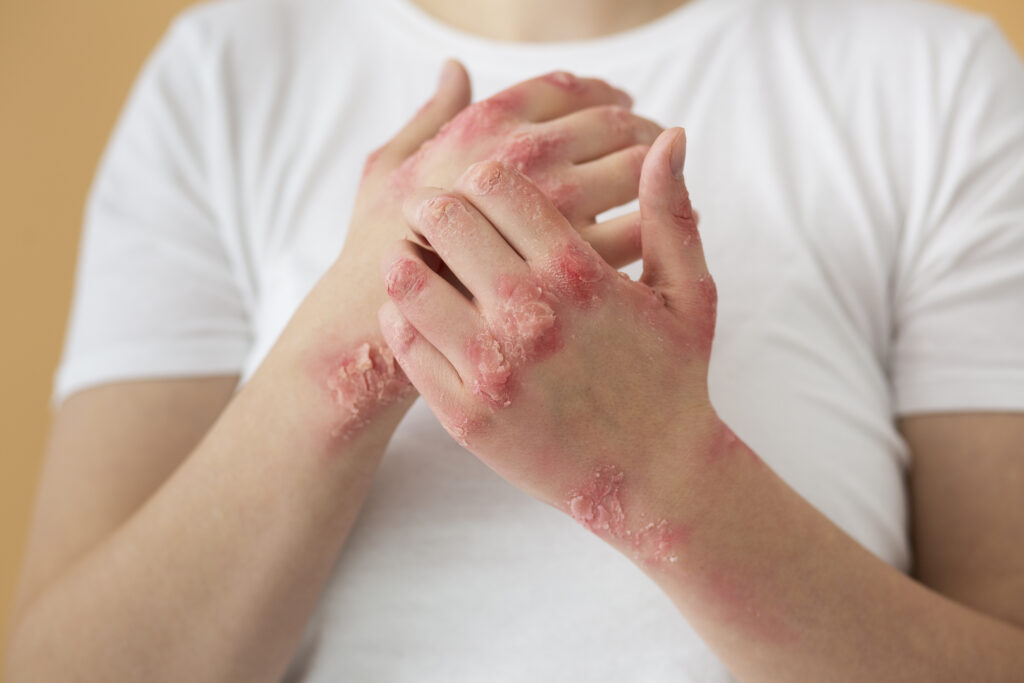
Psoriasis is a common chronic skin condition that causes red, thick, scaly patches on the skin. It occurs due to an overactive immune system that speeds up skin cell production.
Psoriasis is not contagious, but it can affect a person’s quality of life because of itching, discomfort, and cosmetic concerns.
With proper treatment and lifestyle care, psoriasis can be effectively controlled.
What is Psoriasis?
In normal skin, new skin cells take about a month to form and shed. In psoriasis, this process happens much faster — within a few days — leading to buildup of thick scales and inflamed skin.
Psoriasis may affect:
* Scalp
* Elbows
* Knees
* Lower back
* Hands and feet
* Nails
Some patients may also develop joint pain, known as psoriatic arthritis.
Common Symptoms of Psoriasis
Symptoms can vary from person to person and may include:
* Red patches with silvery-white scales
* Dry or cracked skin
* Itching or burning sensation
* Thickened skin plaques
* Scalp dandruff-like scaling
* Nail changes such as pitting or thickening
* Joint pain in some patients
Psoriasis symptoms often occur in cycles with periods of flare-ups and improvement.
What Causes Psoriasis?
The exact cause is not fully understood, but psoriasis is linked to immune system dysfunction and genetic factors.
Common triggers include:
* Stress
* Skin injury
* Infections
* Cold weather
* Smoking
* Alcohol consumption
* Certain medications
Types of Psoriasis
Plaque Psoriasis
The most common type with thick, scaly plaques.
Scalp Psoriasis
Causes scaling and itching over the scalp.
Guttate Psoriasis
Small drop-like lesions usually seen after infections.
Palmoplantar Psoriasis
Affects palms and soles.
Nail Psoriasis
Leads to nail thickening, discoloration, and pitting.
How is Psoriasis Diagnosed?
Dermatologists usually diagnose psoriasis by:
* Clinical examination
* Dermoscopy
* Skin biopsy in selected cases
Treatment Options for Psoriasis
Treatment depends on the severity and extent of disease.
Common treatments include:
* Moisturizers
* Topical steroid creams
* Vitamin D creams
* Oral medications
* Biologic injections
* Phototherapy
One of the safest and most effective treatments for moderate psoriasis is NBUVB phototherapy.
What is NBUVB Phototherapy?
Narrow Band Ultraviolet B (NBUVB) phototherapy is a specialized light treatment that uses a specific wavelength of ultraviolet light (311–313 nm) to reduce skin inflammation and slow excessive skin cell growth.
The treatment is performed under dermatologist supervision using a medical phototherapy unit.
How Does NBUVB Phototherapy Help Psoriasis?
NBUVB works by:
* Reducing skin inflammation
* Slowing rapid skin cell multiplication
* Decreasing scaling and itching
* Improving redness and plaque thickness
Treatment sessions are usually done 2–3 times per week depending on the patient’s condition.
Advantages of NBUVB Phototherapy in Psoriasis Patients
1. Safe and Effective Treatment
NBUVB is considered one of the safest long-term treatment options for psoriasis when supervised by a dermatologist.
2. Reduces Itching and Scaling
Patients often notice improvement in itching, redness, and scaling after multiple sessions.
3. Useful for Widespread Psoriasis
Phototherapy is especially beneficial when psoriasis affects large body areas where creams alone may not be practical.
4. Steroid-Sparing Treatment
NBUVB helps reduce the need for prolonged steroid cream use.
5. Suitable for Chronic Psoriasis
It can help maintain long-term disease control and reduce flare-ups.
6. Better Tolerability
Compared to some oral medications, NBUVB has fewer systemic side effects.
7. Helpful for Scalp and Body Psoriasis
Specialized devices can target difficult areas including scalp psoriasis.
8. Can Improve Quality of Life
As skin lesions improve, patients often experience better confidence and comfort.
Are There Any Side Effects of NBUVB?
NBUVB phototherapy is generally safe, but mild side effects may include:
* Temporary redness
* Dryness
* Mild tanning
* Rare sunburn-like reaction
Regular dermatologist monitoring helps ensure safe treatment.
Tips for Psoriasis Patients
* Use moisturizers regularly
* Avoid scratching the skin
* Manage stress effectively
* Avoid smoking and excessive alcohol
* Follow treatment regularly
* Attend phototherapy sessions consistently
FAQs :
1. Is psoriasis contagious?
No. Psoriasis does not spread from person to person.
2. Can psoriasis be cured permanently?
Psoriasis is a chronic condition, but symptoms can be effectively controlled with proper treatment.
3. How many NBUVB sessions are needed?
The number of sessions varies depending on disease severity. Many patients require multiple sessions over several weeks.
4. Is NBUVB phototherapy painful?
No. The treatment is painless and usually takes only a few minutes.
5. Can children undergo NBUVB treatment?
Yes, NBUVB may be used in selected children under dermatologist supervision.
6. Can psoriasis come back after treatment?
Yes, flare-ups can occur, but regular treatment and trigger control help reduce recurrence.
Conclusion :
Psoriasis is a chronic inflammatory skin condition that can affect both physical and emotional well-being. Early diagnosis and proper treatment can greatly improve symptoms and quality of life.
NBUVB phototherapy is a safe, effective, and widely used treatment option for psoriasis patients, especially those with moderate or widespread disease. Consulting a dermatologist can help determine the best treatment plan based on the severity and type of psoriasis.
