
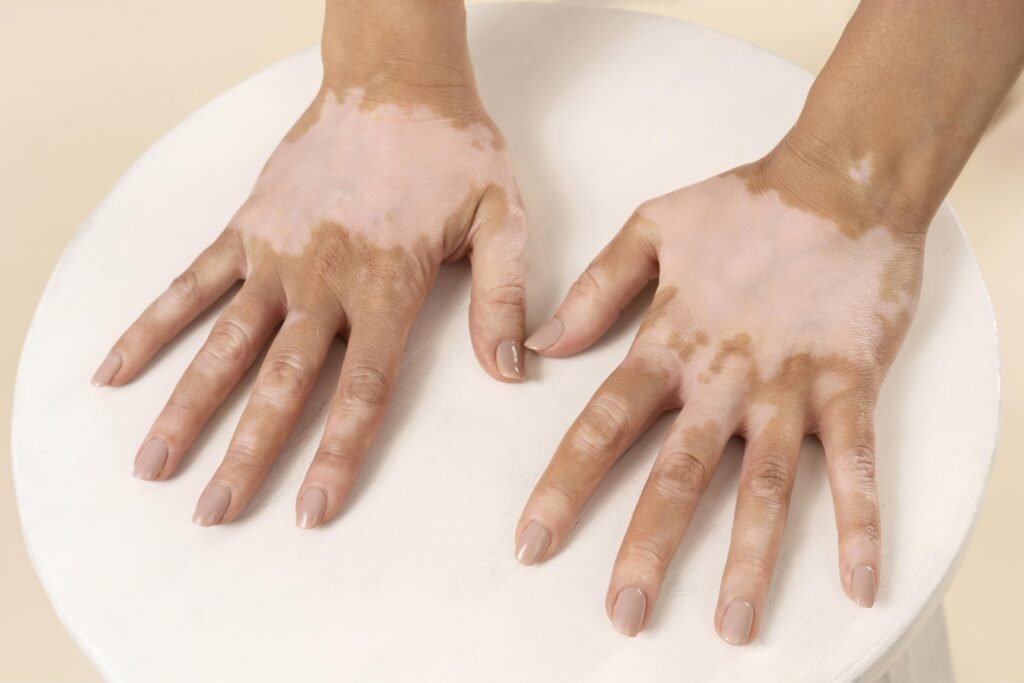
Can Vitiligo Be Cured Permanently? Understanding Treatment and Repigmentation
Vitiligo is a long-term skin condition that causes white or lighter patches to appear on different parts of the body. These patches develop when melanocytes—the cells responsible for producing melanin—are damaged or destroyed.
One of the most common questions people with vitiligo ask is: “Can vitiligo be cured permanently?”
The answer is more nuanced than simply yes or no. Modern vitiligo treatments can help restore skin colour, reduce the visibility of white patches, and control disease activity. However, vitiligo can behave differently from person to person, and pigment may sometimes be lost again after successful treatment.
This article explains vitiligo treatment, repigmentation, treatment expectations, and the importance of long-term management.
What Is Vitiligo?
Vitiligo is a condition in which areas of the skin lose their normal pigmentation. It occurs because melanocytes, the cells that produce melanin, are damaged or destroyed.
Vitiligo can affect:
* Face
* Hands and feet
* Arms and legs
* Around the eyes and mouth
* Lips
* Genital areas
* Scalp and hair
* Other parts of the body
The condition is not contagious and cannot spread from one person to another through physical contact.
Can Vitiligo Be Cured Permanently?
Currently, there is no guaranteed permanent cure for vitiligo for everyone.
However, this does not mean that vitiligo cannot be treated effectively.
Depending on the type, extent, location, and activity of the condition, treatment may help:
* Restore pigmentation
* Reduce the contrast between affected and unaffected skin
* Slow or stop the development of new patches
* Improve the appearance of existing patches
* Maintain repigmentation over time
The goal of treatment is therefore often disease control and repigmentation rather than promising a permanent cure.
What Is Repigmentation in Vitiligo?
Repigmentation means the return of normal or near-normal skin colour to areas affected by vitiligo.
This can happen when functioning melanocytes or melanocyte precursor cells migrate into the depigmented skin and begin producing melanin again.
Repigmentation can occur to different degrees depending on the individual.
Some patients may experience significant improvement, while others may have partial or limited repigmentation.
Does Every Vitiligo Patch Respond the Same Way?
No.
Some areas of the body generally respond better to treatment than others. The face and neck often respond more favourably, while areas such as the fingertips, toes, and certain bony areas may be more resistant to treatment.
This is one reason why treatment should be individualized by a dermatologist.
What Are the Treatment Options for Vitiligo?
Treatment depends on several factors, including the patient’s age, type of vitiligo, location of patches, extent of involvement, and whether the disease is stable or actively progressing.
- Topical Treatments
Certain prescription creams and ointments may be used to help control inflammation and encourage repigmentation.
Depending on the situation, dermatologists may prescribe treatments such as:
* Topical corticosteroids
* Topical calcineurin inhibitors
* Other appropriate topical therapies
The choice of treatment depends on the location and characteristics of the vitiligo.
Because some topical medicines can cause side effects when used incorrectly or for prolonged periods, they should be used under dermatological supervision.
- Narrowband UVB Phototherapy
Narrowband UVB (NB-UVB) phototherapy is one of the important treatment options for vitiligo, particularly when larger areas of the body are affected.
It uses a specific wavelength of ultraviolet light under controlled medical conditions.
Repeated treatment sessions may stimulate repigmentation and help control active vitiligo.
Results usually take time, and patients may need regular sessions over several months.
- Excimer Light or Laser
Excimer light/laser treatment delivers targeted UVB to areas affected by vitiligo.
It may be particularly useful when there are limited or localized patches, because treatment can be focused on affected areas while minimizing exposure to surrounding normal skin.
The suitability of this treatment depends on the patient’s individual condition.
- Surgical Repigmentation Techniques
For carefully selected patients with stable vitiligo, surgical techniques may be considered.
These procedures involve transferring melanocytes or pigment-producing tissue from normally pigmented skin to areas affected by vitiligo.
Surgical treatment is generally considered when the disease has been stable and when medical treatments have not produced satisfactory results.
A dermatologist or specialist experienced in vitiligo surgery can determine whether a patient is an appropriate candidate.
How Long Does Vitiligo Treatment Take?
Vitiligo treatment usually requires patience and consistency.
Repigmentation does not generally happen overnight. Depending on the treatment and individual factors, visible improvement may take several weeks or months.
Some patients require longer treatment periods to achieve meaningful repigmentation.
Factors that can influence the response include:
* Location of vitiligo
* Extent of skin involvement
* Duration of the condition
* Age
* Disease activity
* Type of vitiligo
* Treatment adherence
* Individual response to treatment
Therefore, comparing your treatment progress with another person’s results may not be meaningful.
Can Vitiligo Come Back After Repigmentation?
Yes, vitiligo can recur after successful repigmentation.
Even when skin colour returns, the underlying tendency to develop vitiligo may remain.
This is why vitiligo management is not always about achieving pigmentation once and stopping treatment. Dermatologists may recommend appropriate follow-up and maintenance strategies depending on the patient’s condition.
Recurrence does not necessarily mean that treatment has failed. Vitiligo is a chronic condition that can have periods of activity and stability.
Can Treatment Stop Vitiligo From Spreading?
Treatment may help control active vitiligo and reduce the progression of the condition, but the response varies from person to person.
If new patches are appearing rapidly, it is important to consult a dermatologist rather than waiting for the condition to stabilize on its own.
Early assessment can help determine whether the vitiligo is active and which treatment approach may be appropriate.
Why Early Diagnosis and Treatment Matter
Not every white patch on the skin is vitiligo.
Other conditions, including certain fungal infections, post-inflammatory changes, and other pigmentary disorders, can also cause lighter areas of skin.
A dermatologist can examine the affected areas and, when necessary, use tools such as a Wood’s lamp examination to help with diagnosis.
Once vitiligo is confirmed, treatment can be planned according to the individual’s condition.
Is Vitiligo Treatment the Same for Everyone?
No.
There is no single treatment that works equally well for every patient.
A dermatologist may consider:
* Age
* Type of vitiligo
* Location of patches
* Percentage of body surface affected
* Whether new patches are developing
* Duration and stability of the disease
* Previous treatment
* Patient preferences
For example, treatment for a few facial patches may be very different from treatment for extensive vitiligo involving large areas of the body.
Common Myths About Vitiligo Cure
Myth 1: Vitiligo is completely incurable, so treatment is useless.
Fact: Although there is no guaranteed permanent cure, several treatments can produce significant repigmentation and help control the condition.
Myth 2: Vitiligo is contagious.
Fact: Vitiligo is not contagious. It cannot be transmitted through touching, sharing food, or close physical contact.
Myth 3: Home remedies can permanently cure vitiligo.
Fact: There is no reliable evidence that commonly promoted home remedies can permanently cure vitiligo. Some unproven products may also irritate the skin or delay appropriate treatment.
Myth 4: Treatment will restore pigmentation immediately.
Fact: Repigmentation generally takes time. Treatment response varies according to the individual and the location of the patches.
Myth 5: Once the skin becomes normal, vitiligo can never return.
Fact: Repigmented areas can sometimes lose pigment again, so long-term monitoring may be important.
What Can You Expect From Vitiligo Treatment?
A realistic goal of treatment is improvement rather than a guaranteed permanent cure.
Depending on the individual, treatment may result in:
* Partial repigmentation
* Significant repigmentation
* Near-complete repigmentation in some areas
* Stabilization of active disease
* Improvement in the overall appearance of the skin
Your dermatologist can discuss realistic expectations after assessing your vitiligo.
When Should You See a Dermatologist?
You should consider seeing a dermatologist if you notice:
* New white patches appearing on the skin
* Existing patches becoming larger
* White patches around the eyes, mouth, or genital area
* Whitening of hair within affected areas
* Rapid progression of pigmentation loss
* Uncertainty about whether a white patch is vitiligo
Getting an accurate diagnosis is the first step toward appropriate treatment.
FAQs :
- Is vitiligo completely curable?
There is currently no guaranteed permanent cure for vitiligo, but treatments can help control the condition and restore pigmentation in many patients.
- Can white patches disappear completely?
Some patches may achieve substantial or near-complete repigmentation with appropriate treatment, but results vary depending on the individual and the affected body area.
- How long does vitiligo repigmentation take?
Repigmentation usually takes time and may require several months of consistent treatment. The timeline varies between patients.
- Can vitiligo return after treatment?
Yes. Vitiligo can recur after repigmentation, which is why follow-up and long-term management may be necessary.
- What is the best treatment for vitiligo?
There is no single best treatment for everyone. A dermatologist selects treatment based on the type, location, extent, and activity of vitiligo.
- Is vitiligo contagious?
No. Vitiligo is not contagious and cannot be spread through physical contact.
Conclusion :
Can vitiligo be cured permanently? At present, there is no guaranteed permanent cure that works for every person with vitiligo. However, this does not mean that vitiligo cannot be effectively managed.
Modern treatments—including topical therapies, narrowband UVB phototherapy, targeted excimer treatment, and surgical repigmentation techniques for selected stable cases—can help restore pigmentation and control the condition.
The response to treatment varies from person to person, and repigmentation can sometimes be lost again. Therefore, early diagnosis, individualized treatment, realistic expectations, and regular dermatological follow-up are important parts of vitiligo management.
If you notice new or spreading white patches, consult a dermatologist for proper diagnosis and a personalized treatment plan rather than relying on unproven home remedies.
