
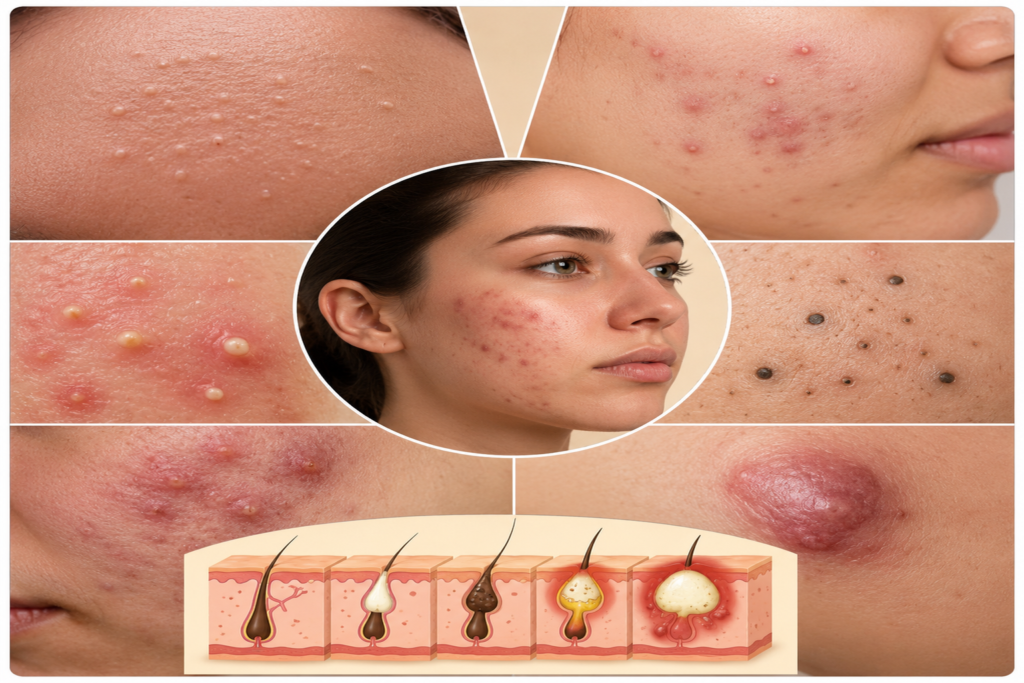
Different Types of Acne: Blackheads, Whiteheads, Papules, Pustules, Nodules & Cysts
Acne is one of the most common skin conditions, affecting teenagers and adults alike. Although many people refer to every breakout as a “pimple,” acne can appear in different forms, ranging from mild blackheads to severe cystic acne. Each type has its own characteristics and may require a different treatment approach.
Recognizing the type of acne you have is the first step toward effective treatment. More importantly, early treatment can prevent acne from becoming severe and reduce the risk of permanent scars.
What Causes Acne?
Acne develops when hair follicles (pores) become blocked with excess oil (sebum), dead skin cells, and bacteria. This blockage can lead to inflammation, resulting in different types of acne lesions.
Common factors that contribute to acne include:
* Hormonal changes
* Genetics
* Excess oil production
* Stress
* Certain medications
* Pore-clogging skincare or cosmetic products
Types of Acne
1. Blackheads (Open Comedones)
Blackheads are the mildest form of acne. They occur when a clogged pore remains open. The black colour is caused by oxidation when the contents of the pore come in contact with air—it is not dirt.
Features
* Small black or dark brown spots
* Usually painless
* Common on the nose, forehead, and chin
Treatment
* Salicylic acid-based cleansers
* Topical retinoids
* Gentle cleansing
* Professional extraction when necessary
2. Whiteheads (Closed Comedones)
Whiteheads develop when a clogged pore remains closed beneath the skin.
Features
* Small white or skin-coloured bumps
* Usually non-inflammatory
* Common on the face, chest, and back
Treatment
* Topical retinoids
* Salicylic acid
* Non-comedogenic skincare products
3. Papules
Papules are small, red, inflamed bumps that develop when clogged pores become irritated.
Features
* Red, tender bumps
* No visible pus
* Mild pain on touch
Treatment
* Benzoyl peroxide
* Prescription retinoids
* Anti-inflammatory medications
* Avoid squeezing or picking
4. Pustules
Pustules are inflamed pimples filled with pus and are one of the most common forms of acne.
Features
* White or yellow centre
* Red, swollen base
* Tender and inflamed
Treatment
* Benzoyl peroxide
* Prescription topical medications
* Dermatologist-guided treatment if recurrent
5. Nodules
Nodules are large, hard, painful lumps that develop deep beneath the skin. They have a high risk of causing permanent scars.
Features
* Deep, painful swelling
* Hard to touch
* Lasts for several weeks
* High risk of scarring
Treatment
Nodular acne should always be evaluated by a dermatologist. It often requires prescription oral medications or other advanced treatments.
6. Cystic Acne (Cysts)
Cystic acne is the most severe form of acne. These deep, painful, pus-filled lesions can cause permanent scars if not treated early.
Features
* Large, painful swellings
* Deep beneath the skin
* Frequently recur
* Very high risk of permanent scarring
Treatment
Early dermatological treatment is essential. Depending on the severity, treatment may include oral medications, hormonal therapy in appropriate patients, or isotretinoin under close medical supervision.
Which Types of Acne Can Cause Scars?
Not every type of acne leaves scars. The deeper and more inflamed the acne, the higher the risk of permanent scarring.
* Blackheads: Usually do not cause scars.
* Whiteheads: Usually do not cause scars.
* Papules: May cause scars if they are picked or if the inflammation is severe.
* Pustules: Can cause scars, especially if they are squeezed or left untreated.
* Nodules: Have a high risk of causing permanent scars because they develop deep beneath the skin.
* Cystic Acne (Cysts): Has the highest risk of permanent scarring and should be treated as early as possible.
Tip: Avoid picking or squeezing pimples, as this can worsen inflammation and increase the chance of scarring.
Why Early Dermatologist Intervention Matters
Many people believe acne will go away on its own and delay seeking treatment. However, untreated acne can progress from mild blackheads or whiteheads to painful nodules or cysts, increasing the risk of permanent scars and dark spots.
A dermatologist can identify the type and severity of acne and recommend the most suitable treatment based on your skin type, age, hormonal factors, and lifestyle.
Benefits of Early Treatment
Prevents Acne from Becoming Severe
Treating acne early can stop mild breakouts from progressing into deeper, more painful forms of acne.
Reduces the Risk of Permanent Scars
Early treatment helps control inflammation before it damages the deeper layers of the skin.
Prevents Dark Spots
Timely treatment reduces the chance of post-acne pigmentation, which can take months to fade.
Avoids Unnecessary Skin Damage
Using multiple home remedies or changing skincare products frequently may irritate the skin and delay improvement.
Improves Confidence
Acne can affect self-esteem and emotional well-being. Effective treatment often improves both skin health and confidence.
When Should You See a Dermatologist?
Consult a dermatologist if:
* Your acne is painful.
* You have nodules or cystic acne.
* Your acne is leaving scars or dark marks.
* Your acne has not improved after 8–12 weeks of appropriate over-the-counter treatment.
* Your breakouts are becoming more frequent or severe.
* Acne is affecting your confidence or daily life.
Early treatment gives the best chance of preventing permanent skin damage and achieving clearer skin.
FAQ’s :
1 Can blackheads turn into pimples?
Yes. If bacteria and inflammation develop, blackheads can progress into papules or pustules.
2 Which type of acne is the most severe?
Cystic acne is the most severe form because it develops deep beneath the skin and has the highest risk of permanent scarring.
3 Is it safe to pop pimples?
No. Popping pimples can increase inflammation, spread bacteria, and raise the risk of scars and dark spots.
4 How long does acne treatment take?
Most acne treatments take 8–12 weeks to show noticeable improvement. Following your dermatologist’s advice consistently gives the best results.
Conclusion :
Acne is not just a cosmetic concern—it is a common skin condition that can appear in different forms, from mild blackheads and whiteheads to severe nodules and cystic acne. Knowing the type of acne you have is important because each type requires a different treatment approach.
While mild acne may respond to proper skincare and topical medications, deeper and more inflammatory acne often requires medical treatment. Seeking help early from a dermatologist can prevent acne from worsening, reduce the risk of permanent scars and dark spots, and help you achieve healthier, clearer skin.
If your acne is painful, keeps coming back, or is leaving scars or pigmentation, do not delay treatment. Early dermatologist intervention can make a significant difference in your skin’s health and long-term appearance.
